

RPB honors Debarshi Mustafi, MD, PhD with Physician Scientist Award
Research to Prevent Blindness (RPB) has announced two new awards to the UW Department of Ophthalmology: the Physician Scientist award to Assistant Professor Debarshi Mustafi, MD, PhD, and the RPB medical student eye research fellowship to Elizabeth Rooks, a medical student at the University of Hawaii spending a gap year in Mustafi’s lab in the Vision Science Center at South Lake Union.
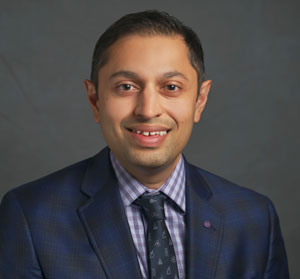
These awards will fund their work to decipher why children who carry the same RB1 gene mutation can experience remarkably different clinical courses of retinoblastoma.
The $300,000 RPB Physician-Scientist Award supports novel eye research. The award is designed to allow physicians to devote more time to clinical research activities, providing greater opportunities for specialized study with direct application to the human condition. Dr. Mustafi is one of 25 RPB Physician-Scientists who have received the award since it was re-established in 2015.
The project builds on emerging evidence from the Mustafi Lab that parent-of-origin effects may significantly influence disease severity. The work will aim to enroll patients from the Seattle area, as well as in partnership with St. Jude Children’s Hospital in Memphis, Tenn., to expand their clinical research cohort.
“This approach has the potential to reshape how genetic risk and tumor behavior are assessed in clinical practice,” Dr. Mustafi said. “Another significant focus of this work will be to understand the differential transcriptional framework of RB1 that may be driving tumorigenesis.”
Dr. Mustafi and Associate Professor Andrew Stacey, MD, have developed a novel blood test that can tell which parent’s DNA carries the disease-causing RB1 gene mutation.
That distinction is meaningful because male and female copies of the mutation are associated with different disease trajectories, the researchers found, and likely would influence doctors’ treatment recommendations.
The new gene-sequencing technique that powers the blood test can also detect parent-of-origin even when the child carries a de novo variant, one that arises spontaneously and is not present in either parent. These de novo cases are the predominant cause of all cancers and account for 90% of all inherited cases of retinoblastoma.
Rooks, who is a recipient of the RPB medical student eye research fellowship, will be instrumental in advancing the goals of this work during her gap research year as she prepares for a career in ophthalmology. She is a third-year medical student at the John A. Burns School of Medicine and a graduate of Duke University.
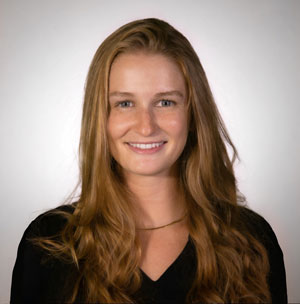
Rooks has begun work to understand the variants in Rb1 that drive retinoblastoma in the general population and will work to recruit patients and collect samples to understand the genetic determinants and the contributions it has on RNA transcription in patient-derived stem cells to better design targeted therapies to modify the expression level of the tumor suppressor gene to restore its function in patients.
Earlier this year, Chris Fortenbach, MD, PhD, Assistant Professor, was awarded a Career Development Award from RPB. Dr. Fortenbach is investigating the therapeutic potential of photoswitches to restore vision in degenerated retinas in his lab at the Vision Science Center at South Lake Union. These light-sensitive small molecules bind to the degenerating retina and confer new light sensitivity to surviving retinal cells. Several generations of these molecules have been developed with differing cell target specificity and sensitivity.
Research to Prevent Blindness (RPB) is a leading nonprofit organization supporting eye research directed at the prevention, treatment or eradication of all diseases that threaten vision. RPB-supported researchers have been associated with many breakthroughs in the understanding and treatment of vision loss over the past 65 years.