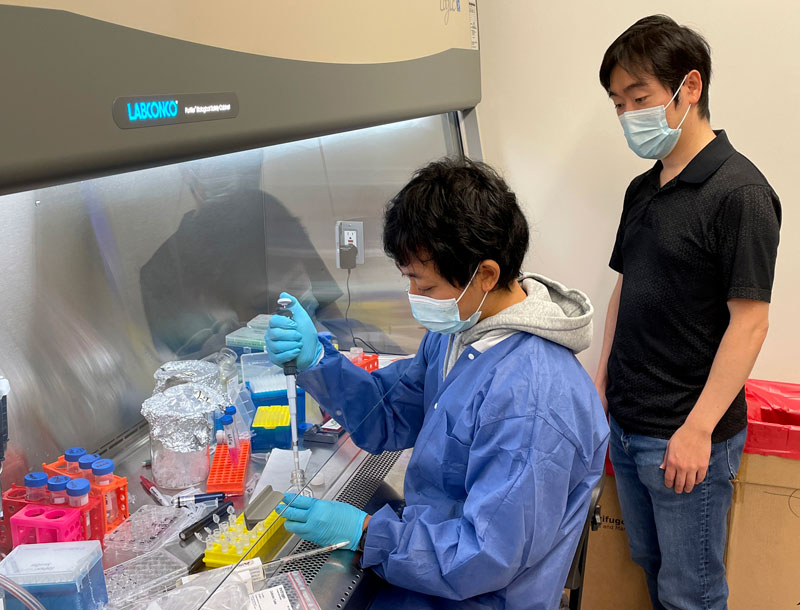
Sasamoto Lab studying new therapies for corneal disease
The Sasamoto Lab in the Vision Science Center at South Lake Union focuses on discovering new therapies that could benefit people affected by corneal disease.
Assistant Professor Yuzuru Sasamoto, MD, PhD, studies corneal regeneration using techniques such as direct reprogramming and induction of limbal stem/progenitor cells from induced pluripotent stem cells (iPSCs).
He is currently working to characterize the ocular surface comprehensively -- from conjunctiva, limbus to cornea. Ultimately, the Sasamoto team is working to reactivate stem cells in damaged corneas, whether through a specialized eye drop or iPSCs-derived cells.
“We hope to inject cells that can support the recovery of stem cells,” Sasamoto said. Some stem cells may remain in a damaged cornea, but not enough to cover the surface and so need support to reactivate them.”
The Sasamoto Lab is using mouse models and human donor corneas from eye banks to create cell cultures.
“This department has a great environment for research and collaboration,” Sasamoto said. He has been the recipient of grants from the Kren Engineering-based Medicine Initiative and the Sinskey Foundation.
Dr. Sasamoto was born and raised in Osaka, Japan, and his parents were both ophthalmologists. He earned his MD from Osaka University Medical School. After completing his ophthalmology training, he earned a PhD from Osaka University Graduate School of Medicine in 2016. He joined the Frank lab at Harvard University in 2016 and opened his NIH-funded lab at Boston University in 2022. His wife, Naoko, is an epidemiologist doing ovarian cancer research at Fred Hutch Cancer Center, and they have three children. In his free time, he enjoys table tennis.