Study shows imaging of eye could detect early Alzheimer's Disease
A simple eye exam may soon do more than check vision It could help detect early signs of Alzheimer’s disease, according to a new study co-authored by UW Ophthalmology researchers, published June 11 in JAMA Ophthalmology.
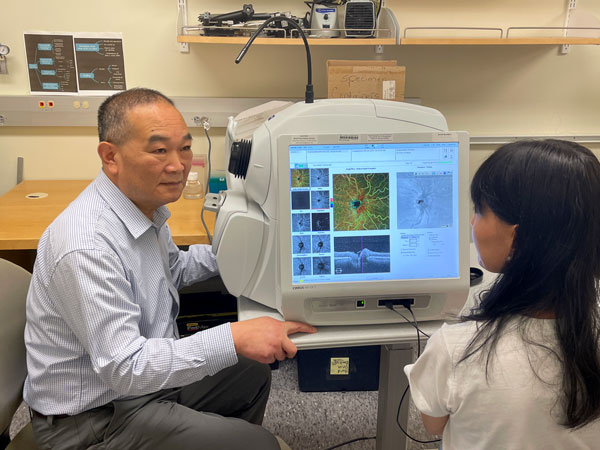
Ricky Wang, PhD, George and Martina Kren Endowed Chair in Ophthalmology Research and Professor of Bioengineering and Ophthalmology, was the senior author of the study along with Acting Assistant Professor Yue Wu, PhD and colleagues in the Departments of Bioengineering and Neurology.
A widely available imaging tool called optical coherence tomographic angiography (OCTA) was used to examine tiny blood vessels in the eye, which are closely connected to the brain. Dr. Wang is widely credited with inventing OCTA, a technique in which blood flow can be measured in all blood vessels in the eye non-invasively. This technique is now a standard testing modality in ophthalmology offices worldwide.
“We found that subtle changes in these vessels can reflect different stages of cognitive health, from normal aging to mild memory loss and Alzheimer’s dementia,” Dr. Wang said.
By combining several of these eye-based measurements, the authors were able to identify patterns linked to cognitive decline, highlighting the eye as a powerful, non-invasive window into brain health.
“What makes this discovery especially meaningful is its potential impact on everyday lives. Unlike current diagnostic methods that can be expensive or invasive, this quick and painless eye scan is already available in many clinics, making it a promising tool for large-scale screening, especially for older adults.” Dr. Wang said.
With further validation, Dr. Wang said this approach may someday be able to detect cognitive impairment earlier, guide timely referrals to specialists, and ultimately give individuals and families more time to plan, seek care, and preserve quality of life. It represents a hopeful step toward more accessible, proactive brain health for aging populations.