

MD/PhD student Nayoon Gim wins NIH science prize
University of Washington MD/PhD student Nayoon Gim, who recently completed her PhD in Bioengineering with a focus in Data Science under supervision of Department of Ophthalmology faculty, has won the National Institutes of Health (NIH) Replication Prize (Track 2: Replication Exemplars) for developing a framework to improve the speed and reproducibility of clinical and epidemiologic research using large public biomedical datasets, a form of clinical research that analyzes patterns in patients’ electronic medical records to better understand diseases, treatments, and health outcomes.
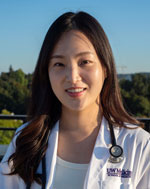
The project, “LATCH: An LLM-Assisted Framework for Accelerated and Verifiable Clinical Hypothesis Testing from Electronic Health Records”, helps make clinical research more transparent, reliable, and reproducible.
The replication component recognized by the NIH Replication Prize was one part of a broader collaborative research effort involving several researchers, including Nayoon Gim; Yue Wu, PhD, UW Assistant Professor of Ophthalmology; UW Affiliate Professors of Ophthalmology Aaron Lee, MD, and Cecilia Lee, MD, now at Washington University in St. Louis; research scientists Yu Jiang, PhD, and Yuka Kihira, PhD, now at Washington University in St. Louis; In Gim, a computer science PhD student at Yale University; and Marian Blazes, MD, now at the Microsoft AI for Good Lab.
The core framework is designed to translate natural-language study methods into executable analytic pipelines that can independently reproduce published findings in a transparent and auditable manner. The motivation for the work stems from a common challenge in computational medicine: many published studies lack sufficient implementation details to enable exact replication. Researchers often build highly customized workflows for cohort selection, variable harmonization, and statistical analysis, but these steps are frequently incompletely documented in manuscripts. As a result, independent validation of findings can be difficult, slow, and resource-intensive.
To evaluate the framework, the team conducted direct computational replications of 20 published diabetes-related studies spanning outcomes including diabetic retinopathy, kidney disease, mortality, and mental and cognitive health. In total, the researchers performed 102 tests to reproduce findings from prior studies, build upon earlier research, and identify potential new patterns in the data. The approach provides a scalable model for strengthening consistency and reproducibility in clinical research using real-world data.
“Our studies of the data have shown that research can be made more efficient and less costly,” Nayoon Gim said. “This demonstrates the potential of utilizing existing AI technologies to lower research barriers and facilitate discoveries.”
Born and raised in South Korea, Gim spent part of her childhood in Chandler, Ariz., before later moving to the United States. She went on to attend Northeastern University in Boston. In 2021, she joined the UW MD/PhD Medical Scientist Training Program. Now a third-year medical student, she recently completed her PhD in Bioengineering with a Data Science option. She was also recognized as a 2026-2027 Magnuson Scholar for her contributions to research on the ophthalmic implications of diabetes.
She became interested in ophthalmology during her 2nd year of medical school after shadowing Associate Professor Shu Feng, MD, observing cataract surgery and becoming fascinated by the immediate impact the procedure could have on restoring patients’ vision. Dr. Feng connected her with the Computational Ophthalmology Lab, which became the home of her PhD research. Originally led by Aaron and Cecilia Lee before their move to St. Louis, the lab is now directed by Dr. Wu. Her PhD training was also shaped by the mentorship of Ricky Wang, George and Martina Kren Endowed Chair in Ophthalmology Research and Professor of Bioengineering and Ophthalmology.
Nayoon contributed to the NIH-funded AI-READI project (Artificial Intelligence Ready and Exploratory Atlas for Diabetes Insights), a four-year initiative to create a large-scale multimodal dataset of individuals with type 2 diabetes by developing retinal imaging processing pipelines. This work resulted in the public release of more than 180,000 de-identified retinal scans across multiple imaging modalities, manufacturers, and devices. The dataset has already become a valuable research resource, with more than 900 groups worldwide downloading the standardized data to study type 2 diabetes, retinal biomarkers, and ophthalmic complications. Other notable work includes the IRIS Registry Post-Cataract IOP and Glaucoma Study with Ophthalmology faculty Andrew Chen, MD, and Parisa Taravati, MD.
Nayoon’s broader commitment is to improve the study and care of chronic disease, particularly among older adults. This motivation is rooted in personal experience, having spent much of her childhood with her grandmother and witnessing firsthand how illnesses such as diabetes and vision impairment can affect independence and quality of life. She aims to build a career that combines patient care, interdisciplinary research, and leadership to improve the translation of clinical data into evidence and to help shape healthcare systems that better serve individuals with chronic illness, particularly those at risk for diabetes and related ophthalmic complications. She credits the mentorship, training, and collaborative community within the UW Department of Ophthalmology for shaping both her personal and professional growth in medicine and research.